
America tried to kill China’s AI industry with export controls.
Instead, it may have created its biggest competitor yet.
New data from IDC reveals a seismic shift in China’s AI chip market —
one that should have Silicon Valley paying very close attention.
The Numbers Don’t Lie
In 2025, China’s AI accelerator server market shipped approximately
4 million units total. Here’s how it broke down:
- Nvidia: 2.2 million units — 55% market share
- Chinese domestic brands: 1.65 million units — 41% market share
- AMD: 160,000 units — just 4%
A year ago, Nvidia was untouchable in China. Now? Nearly half the
market has slipped through its fingers.
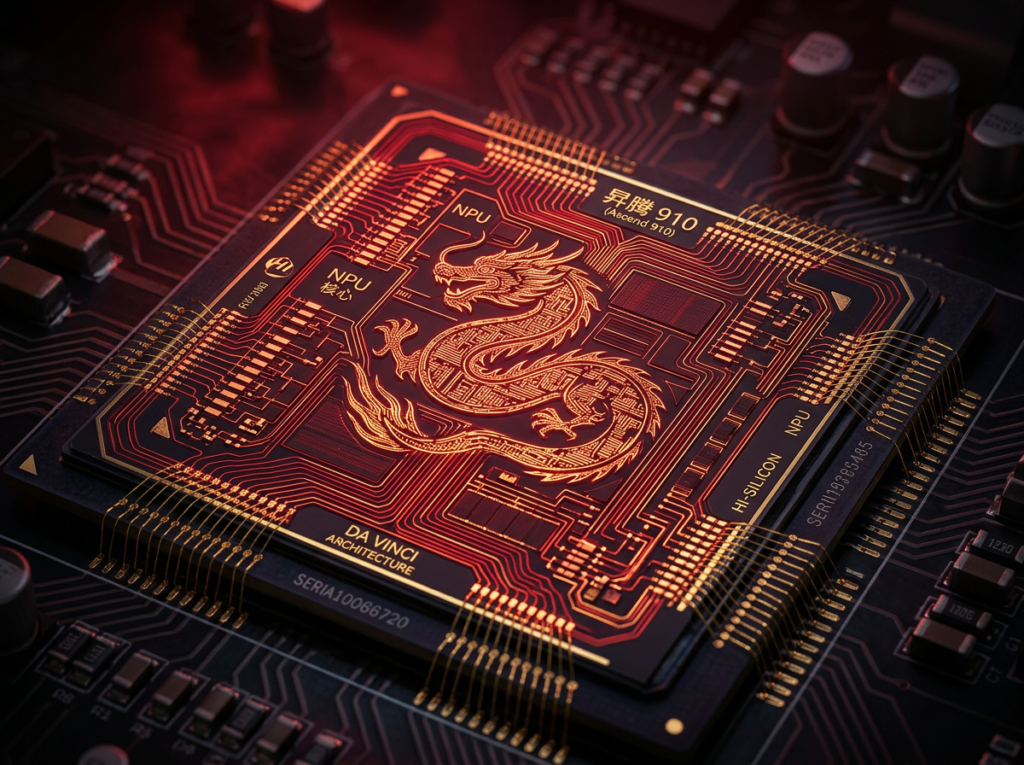
Huawei Is the One to Watch
Among Chinese chipmakers, Huawei is the undisputed leader.
The company shipped approximately 812,000 AI chips in 2025 —
more than half of all domestic Chinese AI chip shipments combined.
Behind Huawei:
- Alibaba’s T-Head: 265,000 units
- Baidu’s Kunlun Xin: 116,000 units
- Cambricon: 116,000 units
And a wave of startups — Hygon, MetaX, Iluvatar CoreX — are rapidly
expanding the ecosystem.
America’s Export Controls Backfired
Here’s the brutal irony: U.S. semiconductor export restrictions,
designed to cripple China’s AI ambitions, may have done the opposite.
By cutting off access to Nvidia’s cutting-edge chips, Washington
forced China to build its own. And China — with the full weight of
government policy behind it — did exactly that.
The Chinese government’s “Buy China” directive quietly pushed
government agencies and state enterprises to adopt domestic chips.
New “intelligent computing centers” are being built across every
province, and local chipmakers are the primary beneficiaries.
Industry analysts are now warning: U.S. restrictions didn’t slow
China’s AI race. They accelerated China’s semiconductor
self-sufficiency.
What This Means for Nvidia
Nvidia still leads with 55% market share — but the trajectory is
alarming. From near-total dominance to 55% in just a few years,
with Chinese competitors now shipping at scale.
At MWC 2026 in Barcelona, Huawei unveiled a sweeping range of
AI-focused networking and computing solutions under the theme
“Advancing All Intelligence.” The message was clear: Huawei isn’t
playing catch-up anymore.
The Bigger Picture
This isn’t just about chips. It’s about who controls the
infrastructure of the AI era.
If China successfully builds a domestic AI chip ecosystem —
independent of American technology — the entire global tech order
shifts. Two parallel AI worlds, two parallel chip supply chains,
two parallel futures.
The geopolitical map of semiconductors is being redrawn right now.
And Huawei is holding the pen.
Do you think America’s chip restrictions were a mistake? Or is this just the inevitable rise of Chinese tech? Tell us in the comments.