
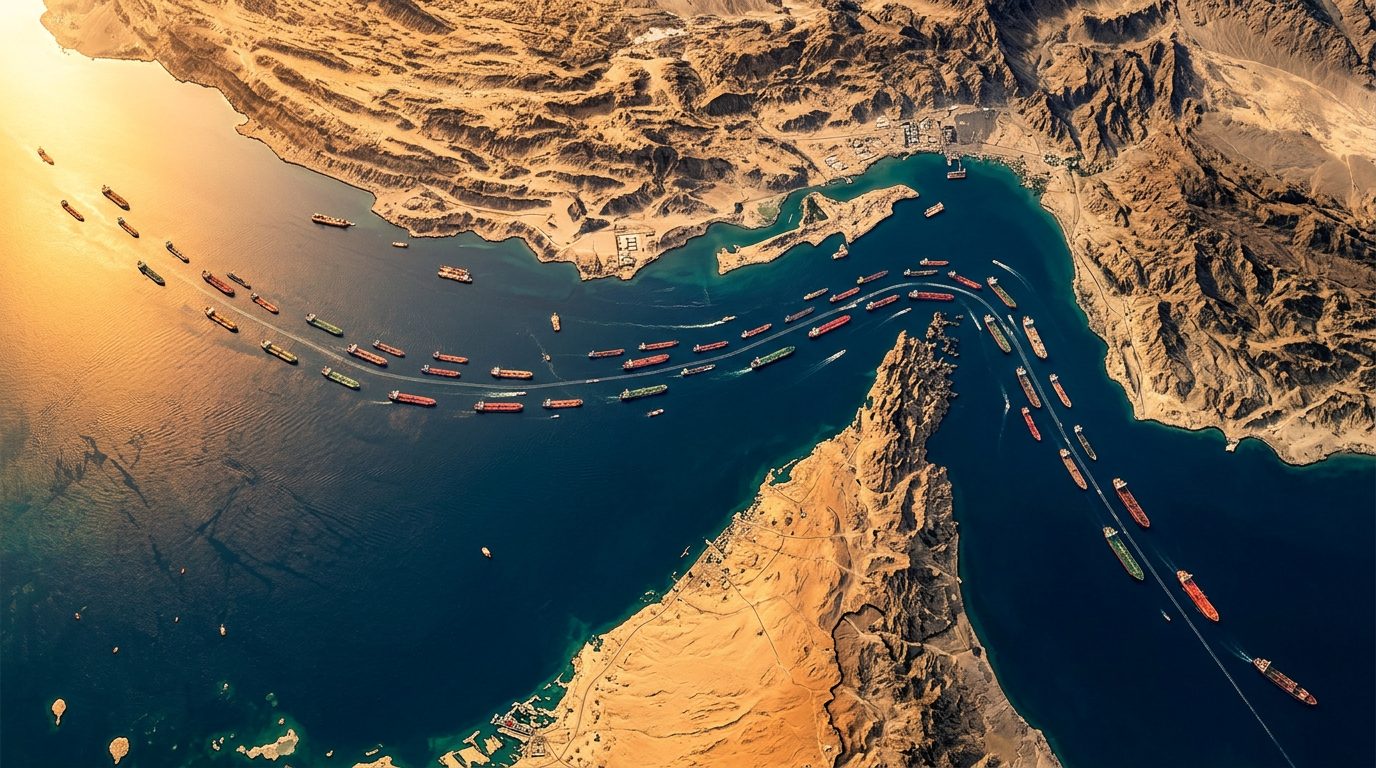
There’s a stretch of water so narrow you could
almost swim across it.
At its thinnest point, it’s just 33 kilometers wide.
And yet, what happens in this slim corridor
of ocean can determine whether you pay $3
or $6 at the gas pump — and whether global
economies boom or collapse.
This is the Strait of Hormuz.
And right now, it’s more relevant than ever.
Where Is It?
The Strait of Hormuz sits between the
Persian Gulf and the Gulf of Oman —
connecting the oil-rich nations of the
Middle East to the rest of the world.
To the north: Iran.
To the south: Oman and the United Arab Emirates.
Two shipping lanes run through it —
each just 3 kilometers wide.
One lane in. One lane out.
That’s it.
Everything — every drop of oil, every cargo ship —
must pass through this impossibly narrow gap
to reach the open ocean.
Why Does It Matter So Much?
One number tells the story.
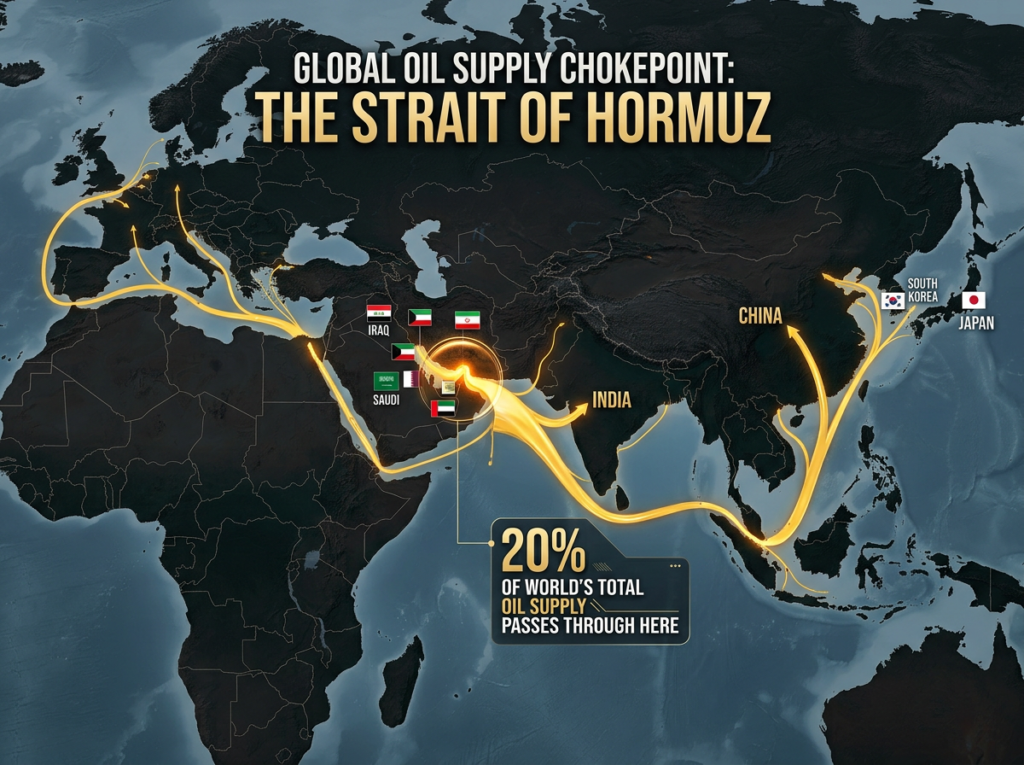
Approximately 20% of the world’s oil supply
passes through the Strait of Hormuz every single day.
That’s roughly 17-21 million barrels of crude oil.
Every. Single. Day.
The countries that ship oil through this strait include:
- Saudi Arabia (world’s largest oil exporter)
- Iraq
- Kuwait
- UAE
- Qatar (world’s largest LNG exporter)
- Iran itself
If this strait closes — even for a week —
the ripple effects would be felt at every
gas station, factory, airline, and shipping
company on Earth.
What Would Happen If It Closed?
This isn’t hypothetical.
Economists have modeled it extensively.
Day 1-3: Oil prices spike immediately.
Futures markets go haywire.
Airlines and shipping companies begin emergency planning.
Week 1-2: Global oil prices could double
or even triple. Gas prices at pumps worldwide
surge. Supply chains begin to fracture.
Month 1+: Economies dependent on Middle
Eastern oil — Japan, South Korea, China, India,
much of Europe — face severe energy shortages.
Industrial production slows. Inflation spikes globally.
There is no quick alternative.
The only other major route would require
oil tankers to sail around the entire African
continent — adding weeks and enormous cost
to every shipment.
Iran’s Nuclear Card
Here’s the geopolitical reality.
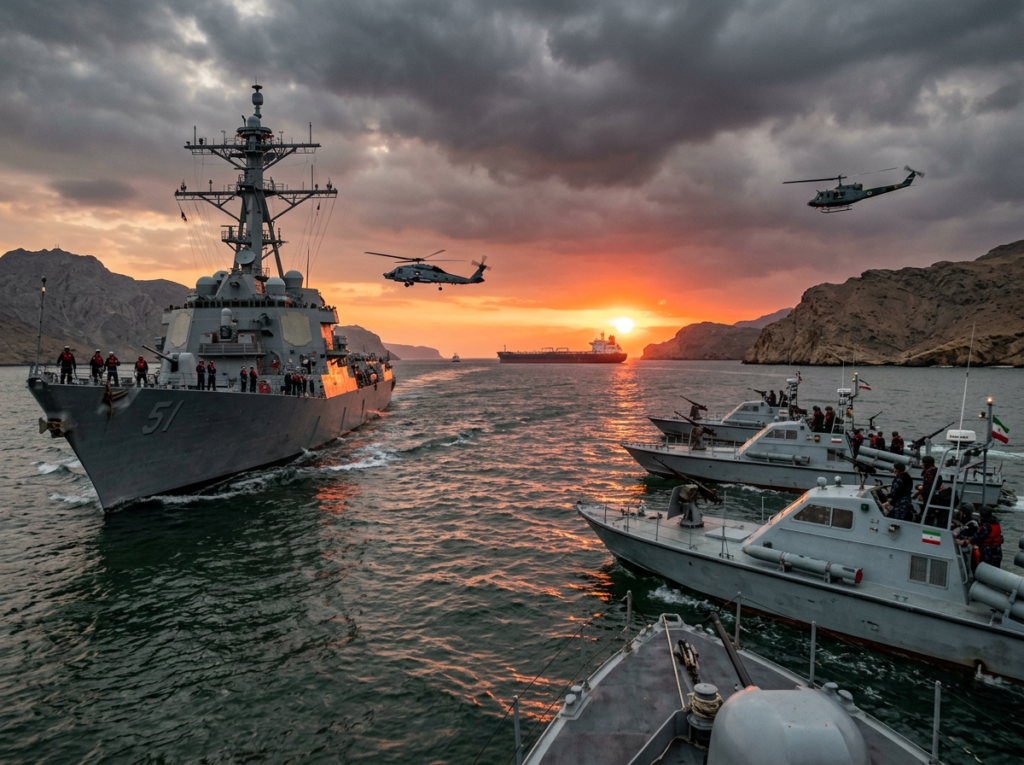
Iran sits on the northern shore of the strait.
Its military has repeatedly threatened to close
the waterway during periods of tension with the West.
Iran’s strategy is clear: the strait is its
most powerful leverage point.
Even the threat of closure sends oil markets
into panic. Actually closing it — even briefly —
would be an act of economic warfare against
the entire global economy.
This is why the U.S. Navy’s Fifth Fleet
is permanently stationed in Bahrain.
This is why multiple countries maintain
naval presences in the Persian Gulf.
The strait must stay open. At almost any cost.
Why It’s In The News Right Now
With the ongoing U.S.-Iran conflict
that began in February 2026,
the Strait of Hormuz has returned to
the center of global attention.
President Trump explicitly addressed it in
his April 1 address, telling allies:
“Nations relying on oil via the Strait
must manage it themselves.”
That statement — essentially announcing
America is stepping back from its role
as the strait’s guarantor — sent shockwaves
through energy markets and foreign ministries worldwide.
South Korea, Japan, and China —
all heavily dependent on Gulf oil —
are now quietly reassessing their naval
and diplomatic strategies.
The Alternatives That Don’t Really Work
There are pipelines that bypass the strait:
Saudi Arabia’s East-West Pipeline:
Can carry about 5 million barrels per day —
a fraction of the 20 million that normally
flow through Hormuz.
UAE’s Abu Dhabi Crude Oil Pipeline:
Another partial bypass, but again,
nowhere near sufficient capacity.
The brutal reality: there is no realistic
alternative to the Strait of Hormuz
at anywhere near its current scale.
The world built its energy infrastructure
around this single narrow waterway.
And now, in 2026, that vulnerability
is more exposed than ever.
What This Means for You
You might be thousands of miles from the
Persian Gulf. You might never have heard
of Hormuz before today.
But the next time you fill up your gas tank,
pay your electricity bill, or notice prices
rising at the grocery store —
There’s a 33-kilometer-wide strip of water
on the other side of the world that
had something to do with it.
Did you know how much of the world’s oil passes through the Strait of Hormuz? And do you think the world is too dependent on this single chokepoint? Tell us in the comments. 👇