
Every spring, millions of people start diets.
And within weeks, millions of those same people
are dealing with bloating, constipation,
and a body that feels heavier than before.
The culprit? Not what they’re eating.
What they’ve stopped eating.
The Hidden Cost of Eating Less
When you reduce your food intake,
you also reduce your dietary fiber intake.
Less fiber means slower digestion,
harder stools, and a gut that starts
working against your weight loss goals
instead of with them.
Here’s something most diet plans don’t tell you:
Your gut and your brain are directly connected
through what scientists call the gut-brain axis.
When gut health suffers, parasympathetic nerve
activity decreases — disrupting your body’s
natural rhythms, affecting sleep, mood,
and even metabolism.
In other words: a constipated gut doesn’t
just make you uncomfortable.
It can actively slow your weight loss.
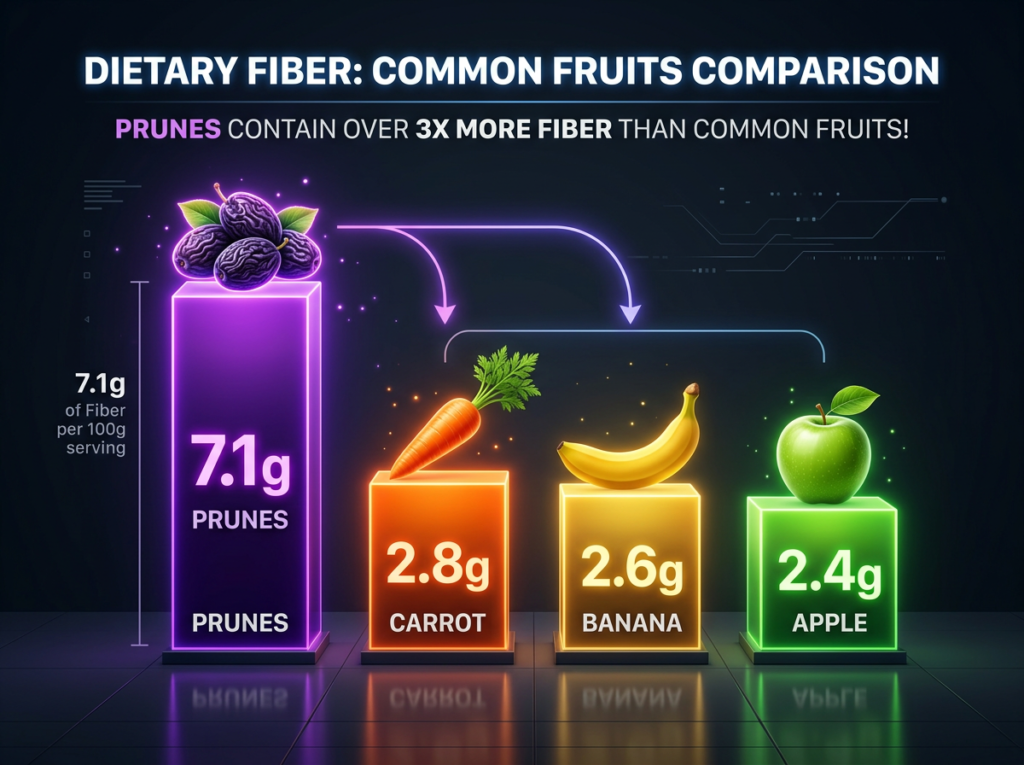
The Fruit with 3x More Fiber Than an Apple
Enter prunes.
Yes, prunes. The fruit your grandparents ate.
According to the U.S. Department of Agriculture (USDA),
prunes contain 7.1g of dietary fiber per 100g —
approximately 3 times more than apples,
bananas, or carrots.
But the type of fiber matters too.
Prunes contain both soluble and insoluble fiber —
a combination that works on multiple levels:
- Soluble fiber feeds beneficial gut bacteria
and regulates digestion speed - Insoluble fiber adds bulk to stool
and keeps things moving
The Blood Sugar Surprise
Here’s where most people get tripped up.
Prunes taste sweet. Very sweet.
So most dieters assume they’re off-limits
due to high sugar content.
They’re wrong.
Prunes have a glycemic index (GI) of just 29 —
placing them among the lowest-GI fruits available,
alongside cherries.
For reference:
- GI below 55 = low glycemic
- GI 56-69 = medium
- GI 70+ = high glycemic
White bread? GI of 75.
Watermelon? GI of 76.
Prunes? 29.
The sweet taste comes from natural sugars
that are absorbed slowly — keeping you fuller
longer without spiking your blood sugar.

What the Research Shows
A study published in the Journal of Medicinal Food
found that postmenopausal women who consumed
50-100g of prunes daily for 6 months showed
significant reductions in:
- Total cholesterol levels
- Inflammatory markers
California prunes have also received
Bone Health Approved certification from the
Royal Osteoporosis Society — the first natural
food to receive this recognition.
How to Add Prunes to Your Diet
Start small. The fiber content is real —
and if your gut isn’t used to it,
too much too fast can cause discomfort.
Recommended starting amount: 3-5 prunes per day
Adjust based on how your body responds.
Most people find 5-10 prunes per day
is a comfortable long-term amount.
Best times to eat them:
- Morning (kickstarts digestion for the day)
- As an afternoon snack (fiber keeps you full)
- Before bed (supports overnight digestion)
No saturated fat. Natural sugars only.
GI of 29. Fiber content that beats most vegetables.
For a fruit that most people wrote off as
“old people food,” prunes might be the most
underrated diet tool available.
Do you eat prunes regularly? Or is this convincing you to try them? Tell us in the comments. 👇