
Every spring, millions of people reach for
antihistamines, blow their nose endlessly,
and wait for pollen season to end.
But doctors are now warning that chronic
rhinitis — what most people call “just allergies” —
isn’t just an inconvenience.
Left untreated, it may be silently damaging
your lungs.
What’s Actually Happening in Your Nose
Your nose isn’t just for smelling.
It’s the first line of defense for your
entire respiratory system — warming incoming air,
regulating humidity, and filtering out harmful
particles before they reach your lungs.
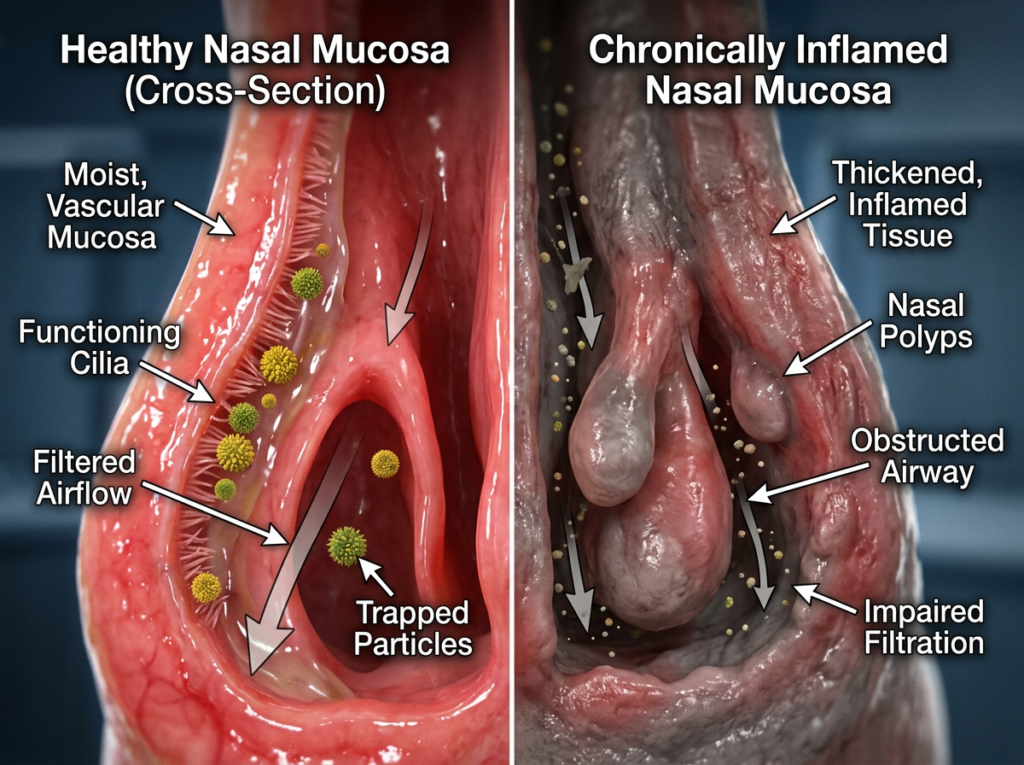
When rhinitis strikes, inflammation attacks
the nasal mucosa — the delicate lining that
performs all these functions.
Dr. Kim Nam-seon of Yeongdong Korean Medicine Clinic
explains: “Rhinitis is a condition where inflammation
develops in the nasal mucosa, affecting the entire
respiratory environment.”
Why It Gets Worse Over Time
Here’s what most people don’t realize.
Every time rhinitis flares up, and you treat
the symptoms without addressing the underlying cause,
your nasal lining takes damage.
Healthy mucosa is moist, elastic, and bright red.
Repeatedly inflamed mucosa becomes dry,
shrunken, and loses its elasticity.
The result: a vicious cycle.
Damaged lining → overreacts to small triggers →
more inflammation → more damage →
worse reaction to smaller triggers.
Dr. Hong Eun-bin warns: “In chronic cases,
the nasal mucosa swells and narrows the airway,
reducing the ability to warm, humidify, and filter
air — degrading the quality of air reaching the lungs.”
The Lung Connection Nobody Talks About
This is where it gets serious.
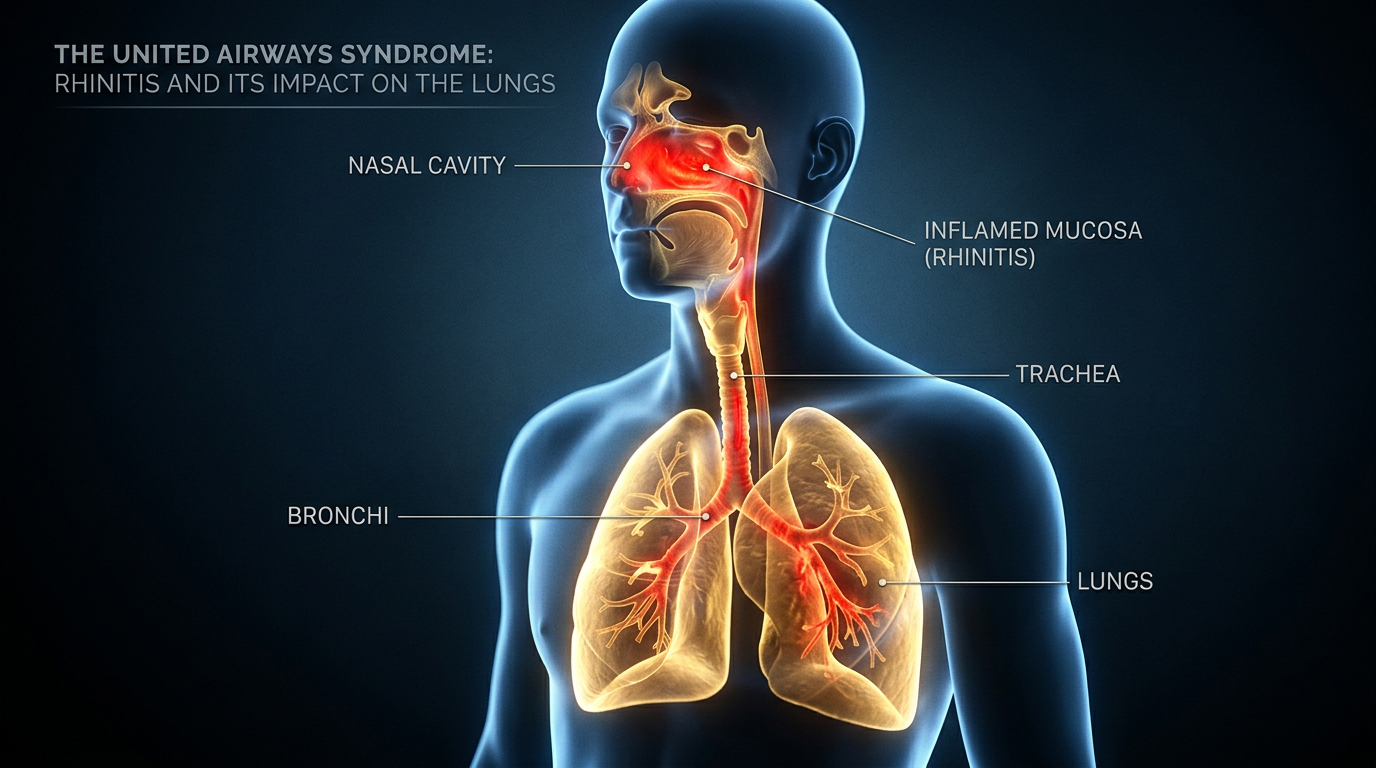
New research shows that the nose and lungs
aren’t separate systems — they’re one unified airway.
Consider this finding: among patients with
chronic obstructive pulmonary disease (COPD),
9 out of 10 also have chronic rhinitis symptoms.
Dr. Kim explains: “This supports the idea that
upper and lower airway inflammation influences
each other — treating only the nose while
ignoring the lungs, or vice versa, misses
the full picture.”
Why Surgery Doesn’t Fix It
Many rhinitis sufferers eventually consider surgery —
removing tissue inside the nose to widen the airway.
It works. Temporarily.
But if the underlying mucosal function isn’t restored,
inflammation returns. The narrowing comes back.
The surgery has to be repeated.
Dr. Kim’s advice: “Surgery can be an option
in severe cases, but it’s best considered
after controlling inflammation first.”

The Whole-Body Approach
Traditional Korean medicine views rhinitis
differently from Western medicine.
Rather than treating the nose in isolation,
it looks at the full picture: lung function,
immune balance, digestive health.
Interestingly, many chronic rhinitis patients
also report:
- Easy sweating after meals
- Persistent fatigue
- Digestive discomfort after bowel movements
These aren’t coincidences — they’re signs
that the body’s regulatory systems are
under stress across multiple fronts simultaneously.
What Actually Works Long-Term
The goal of chronic rhinitis treatment isn’t
to suppress symptoms every season.
It’s to restore mucosal function so that
seasonal changes stop triggering flare-ups entirely.
Approaches showing promise:
- Acupuncture injection therapy — targeting
congested mucosal tissue directly to improve
circulation and tissue elasticity - Herbal medicine — personalized formulas
to regulate the immune response and restore
mucosal function - Integrated airway treatment — addressing
nose, bronchi, and lungs as one connected system
Do you suffer from chronic rhinitis every spring? Have you ever tried anything beyond antihistamines? Tell us what worked — or didn’t — in the comments. 👇