
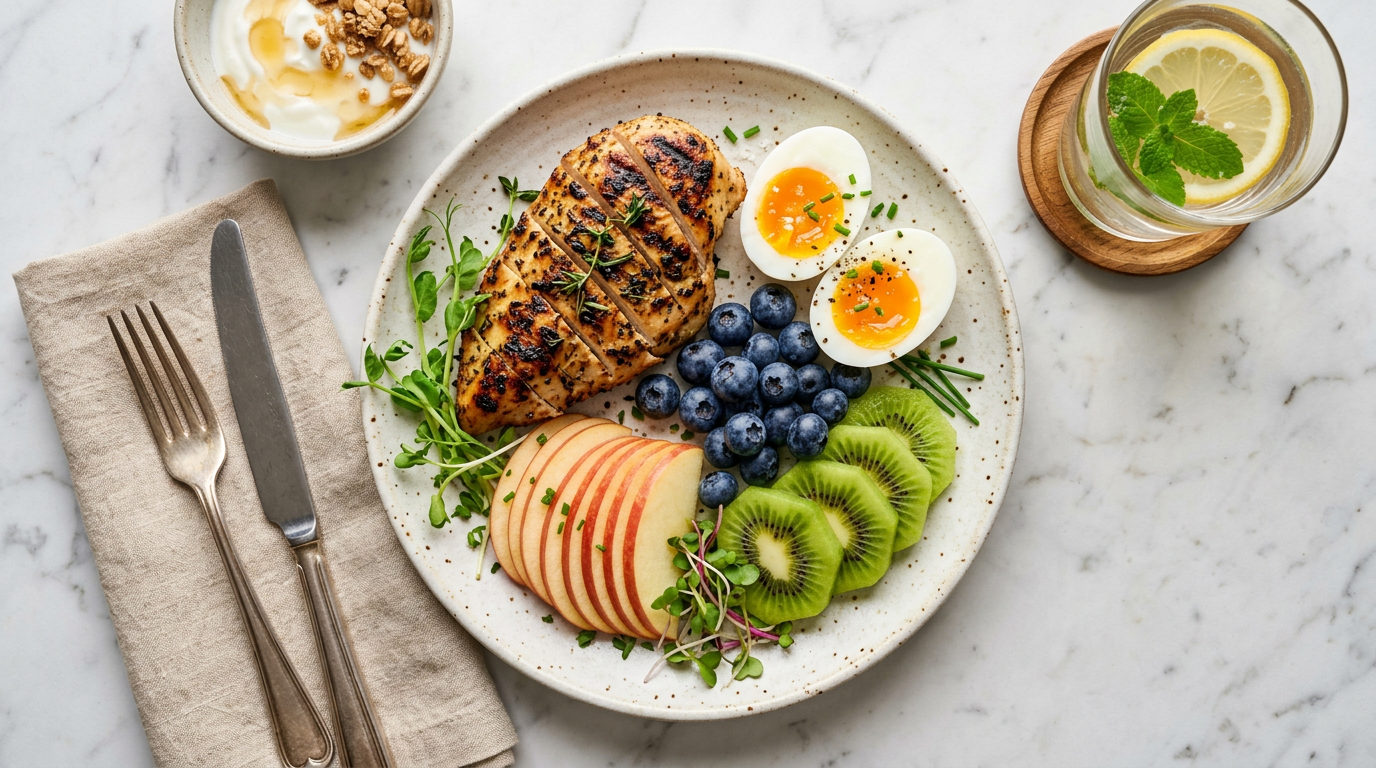
If your diet plan is “eat less salad and suffer,”
a doctor has some news for you: you’re doing it wrong.
Dr. Woo Chang-yun, an endocrinology specialist,
appeared on a popular Korean morning talk show
and dropped a surprisingly simple insight that’s
going viral — and the science backs it up completely.
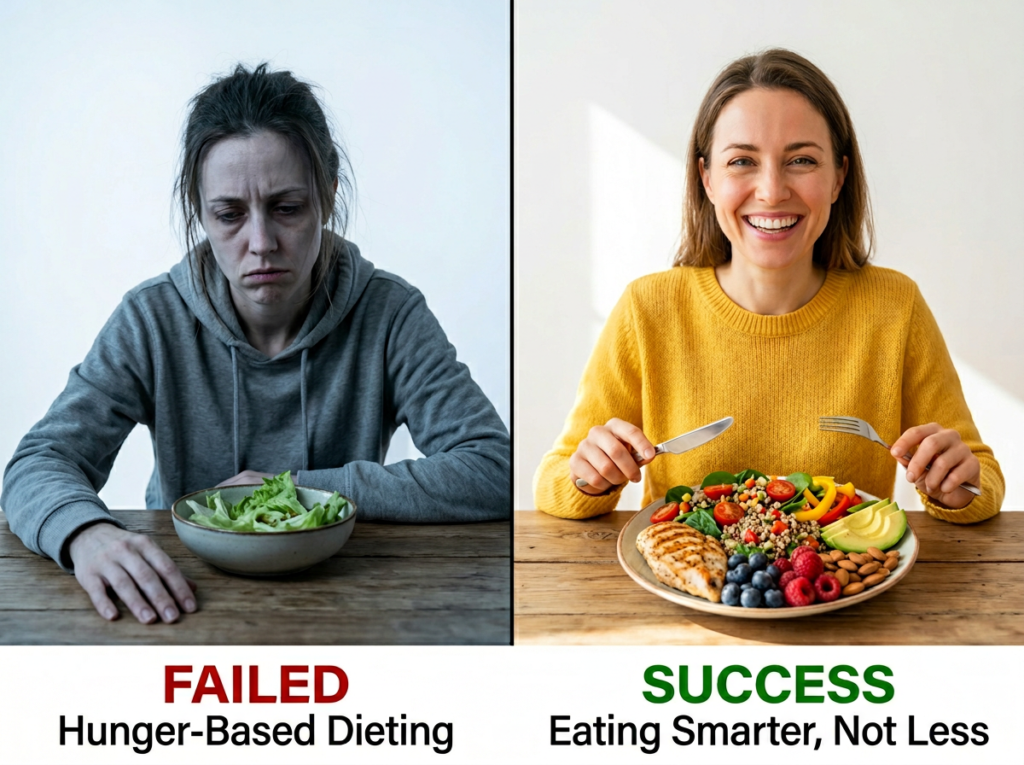
Why Salad Alone Doesn’t Work
The problem with most diets isn’t willpower.
It’s biology.
“Dieting by enduring hunger goes against your
survival instincts,” Dr. Woo explained.
“You need to stack satiety like bricks —
building fullness that lasts.”
When you eat too little, your body panics.
Hunger hormones spike. Cravings become unbearable.
And eventually, the binge comes.
The solution isn’t eating less.
It’s eating smarter — specifically, eating the
right combination of foods that keep you full longer.
The 2-Thing Combo Doctors Actually Recommend
① Protein
Protein triggers the release of GLP-1 —
a hormone that signals fullness to your brain.
Sound familiar? GLP-1 is the exact same mechanism
targeted by Ozempic and Wegovy — the blockbuster
weight loss drugs everyone’s talking about.
The difference? You can trigger it naturally,
for free, through food.
Best protein sources:
- Chicken breast
- Eggs
- Tofu
- Lean beef (round cut)
- Pork tenderloin
Fun fact: Pork tenderloin has 1.5x the protein
of belly pork (bacon) — with only 1/3 the calories.
② Soluble Fiber
Here’s where it gets interesting.
Protein creates a first wave of fullness in your
stomach and small intestine. But soluble fiber
travels all the way to your large intestine —
triggering a second wave of satiety hormones hours later.
This one-two punch is what keeps you full
for hours, not minutes.
Best soluble fiber sources:
- Apples
- Blueberries
- Kiwi
- Other low-glycemic index fruits
These fruits are specifically recommended because
they have low sugar impact but high nutritional density.
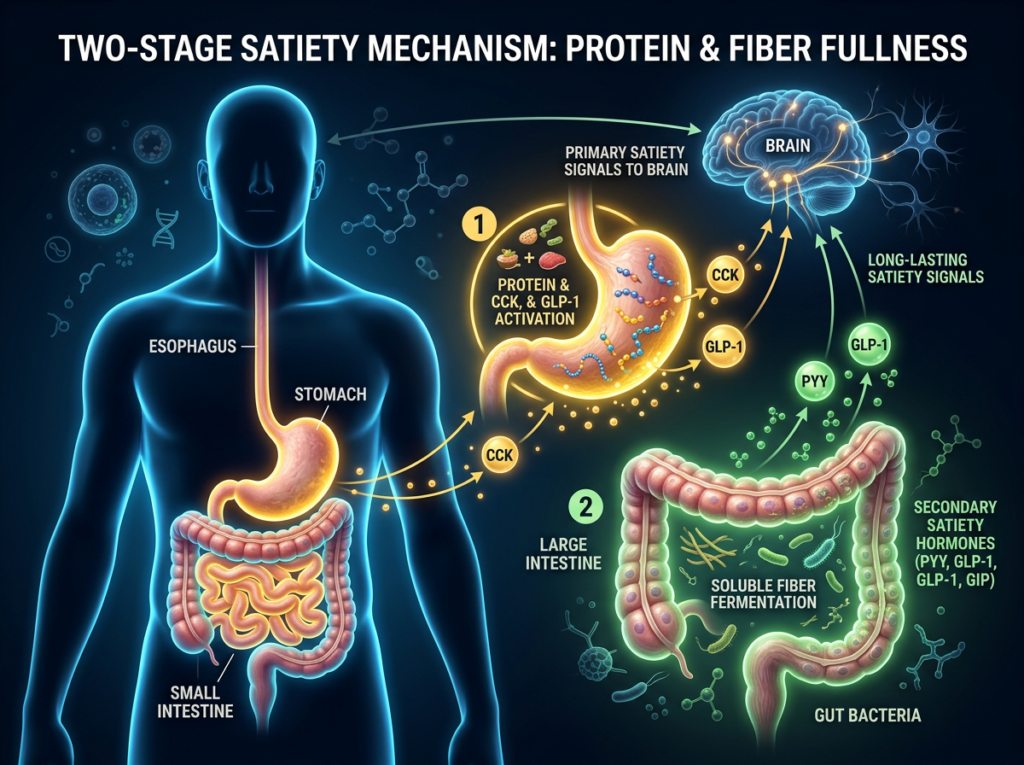
Why This Combination Works — The Science
Protein + soluble fiber creates a two-stage
fullness system:
- Stage 1: Protein triggers GLP-1 in the
stomach and small intestine → immediate fullness - Stage 2: Fiber ferments in the large intestine
→ additional satiety hormones released hours later
Meanwhile, protein also suppresses ghrelin —
the hunger hormone — reducing cravings between meals.
Multiple studies confirm: high-protein diets
reduce appetite and promote weight loss.
Eating protein at breakfast specifically has
been shown to reduce total daily calorie intake.
What About Carbs?
Don’t throw them out entirely.
Carbohydrates are still essential fuel for your body.
Cutting them completely risks muscle loss,
fatigue, and — ironically — binge eating.
Balance is the key. The goal is to add more
protein and fiber, not to eliminate everything else.
The Simple Meal Formula
Breakfast: Eggs + apple or blueberries
Lunch: Chicken breast + kiwi
Dinner: Lean beef or tofu + mixed berries
No starvation. No suffering.
Just two ingredients working together
to keep hunger away naturally.
Have you tried a high-protein diet? Did it actually work for you? Share your experience in the comments! 👇