
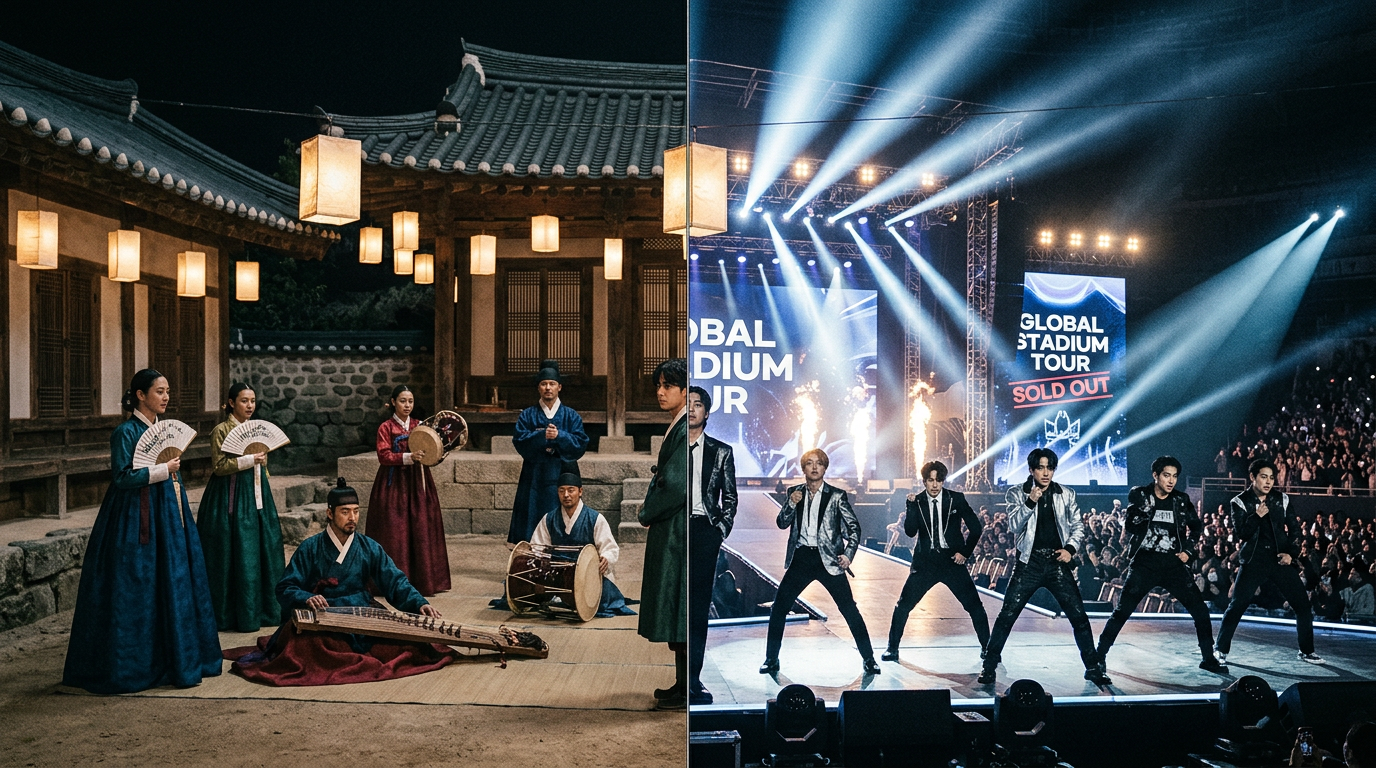
BTS built their empire singing in Korean.
Now their latest album — titled “ARIRANG,”
named after Korea’s most iconic folk song —
has its lead single entirely in English.
And Koreans are not happy about it.
The Comeback Everyone Was Waiting For
After nearly four years, BTS returned with
their fifth studio album “ARIRANG” —
their most ambitious project since their
mandatory military service hiatus.
The timing felt significant. The title felt
symbolic. A return to Korean cultural roots,
wrapped in the name of a song that Koreans
have sung for generations.
Except the lead single, “Swim,”
has not a single word of Korean in it.
The BBC’s Verdict
In an analysis published April 8, the BBC
framed it plainly:
BTS is “caught between Korea and the world.”
The contradiction is hard to miss.
An album named after Korea’s most beloved
traditional folk song, released to celebrate
Korean heritage — with English-only lyrics
on the title track.
“Some Koreans are taking issue with the
excessive proportion of English lyrics,”
the BBC noted, adding that critics argue
BTS and HYBE are “chasing lucrative Western
markets at the cost of originality.”
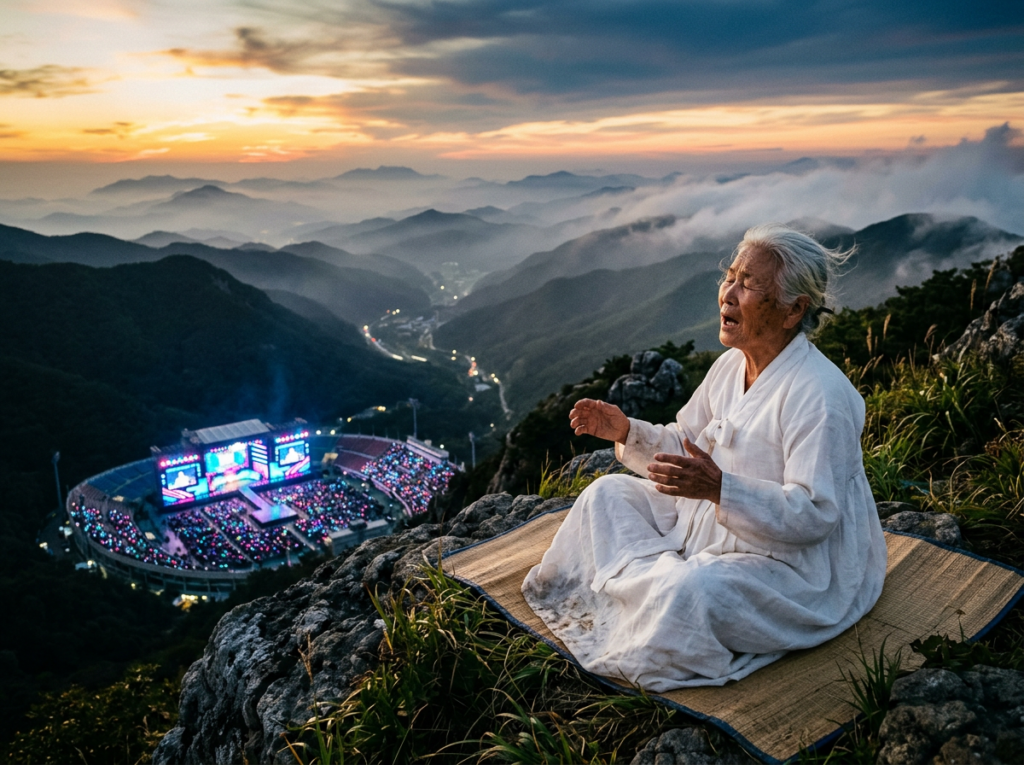
How We Got Here
The trajectory is clear when you look at the timeline.
Early BTS: overwhelmingly Korean lyrics,
deeply personal storytelling rooted in
Korean youth experience.
2020: “Dynamite” — their first all-English single.
It debuted at #1 on the Billboard Hot 100.
2021: “Butter” — another English-language
commercial juggernaut.
2026: “Swim” — the lead single from an album
named after a Korean folk song — entirely in English.
Billboard veteran Rob Schwartz acknowledged
the group’s extraordinary achievement:
“Before K-pop became the global phenomenon
it is today, there was a question mark over
whether it could ever get there.
Thanks to BTS, that question is no longer asked.”
But the question being asked now is different:
In becoming a global phenomenon, did BTS stop being K-pop?
Bang Si-hyuk’s Honest Answer
HYBE chairman Bang Si-hyuk addressed this
directly in a Billboard interview on the same day.
He called this era “BTS 2.0” —
and was explicit that it’s a deliberate departure.
“This must never remain an extension of the past.
It must be a declaration that a new chapter is beginning.”
His vision: prove that BTS can be recognized
as genuine artists — not just a boy band —
without dismantling the group.
The risk he took to get there?
Stripping away the choreography.
“For ‘Swim’ and ‘Hooligan,’ we revised it
so there’s almost no choreography.
The members questioned this, but I told them:
‘Artists like you can do enough just by standing.
The intense synchronized dancing we did before
was obscuring the music.'”

The Tension at the Heart of It
The BBC identified something that goes deeper
than just language choice.
BTS is caught between:
- Old and new
- Korea and global
- Artistic identity and commercial expectation
- Members’ creative instincts and larger strategy
Bang himself admitted the pressure:
“Results aren’t the final goal — but at the
same time, it’s not easy to be completely
detached from the metrics in reality.”
He spent 18 months on this album.
The weight of that is visible in every
word of his interview.
The Bigger Question
BTS didn’t just change K-pop.
They made it a global industry.
But in doing so, they may have outgrown
the very genre that made them.
Is “ARIRANG” a celebration of Korean heritage?
Or is it Korean heritage as a brand —
a marketing frame around music that
sounds increasingly like global pop?
There’s no clean answer.
And that ambiguity is exactly what
the BBC, Korean fans, and the group itself
are wrestling with right now.
Do you think BTS has drifted too far from K-pop? Or is evolving beyond a single genre exactly what great artists should do? Tell us in the comments. 👇