
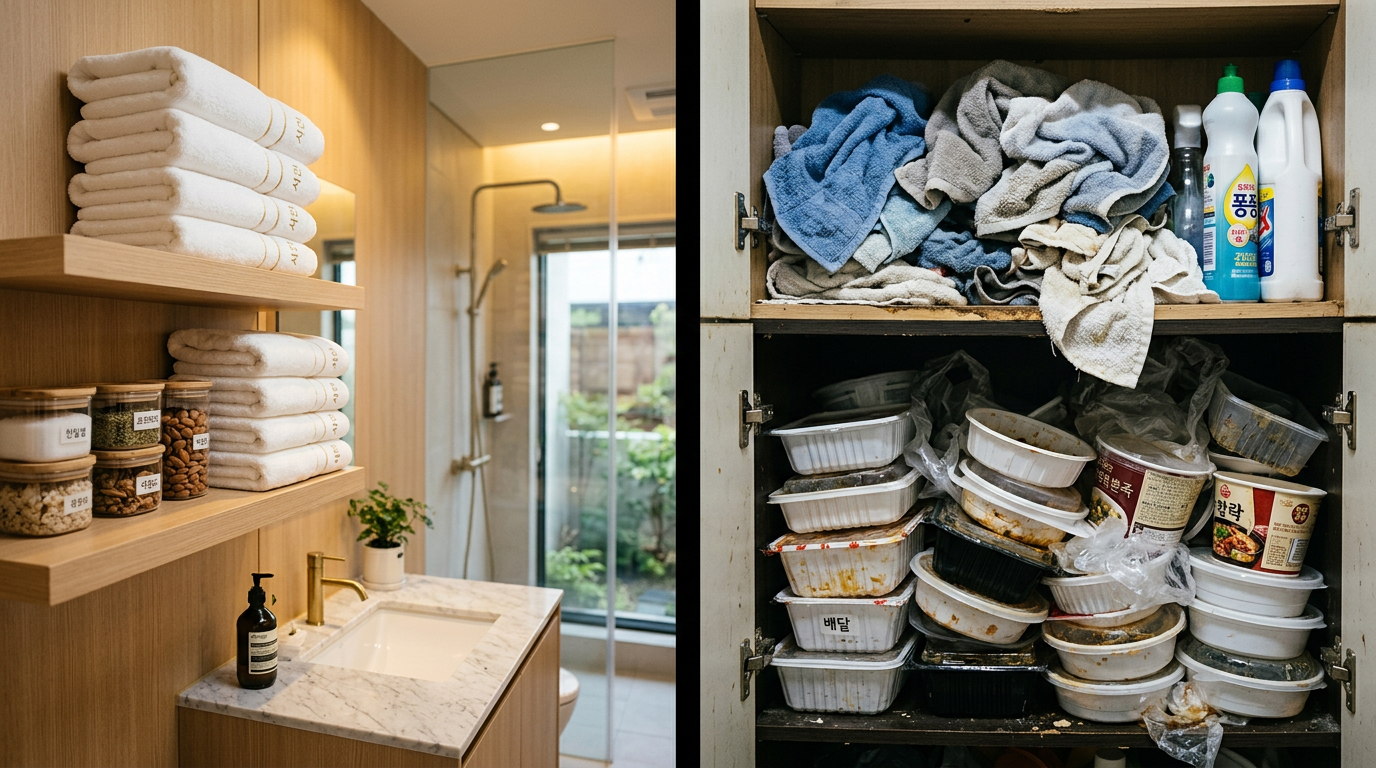
A decluttering consultant in South Korea has
organized over 3,000 wealthy homes across Seoul.
And after all that time inside the houses of
the rich — he noticed a pattern.
There are two items that appear in almost
every struggling household. Two items that
wealthy families have long since thrown away.
You almost certainly have both of them right now.
Item #1: Your Old Towels
When did you last replace your towels?
If you can’t remember, that’s the problem.
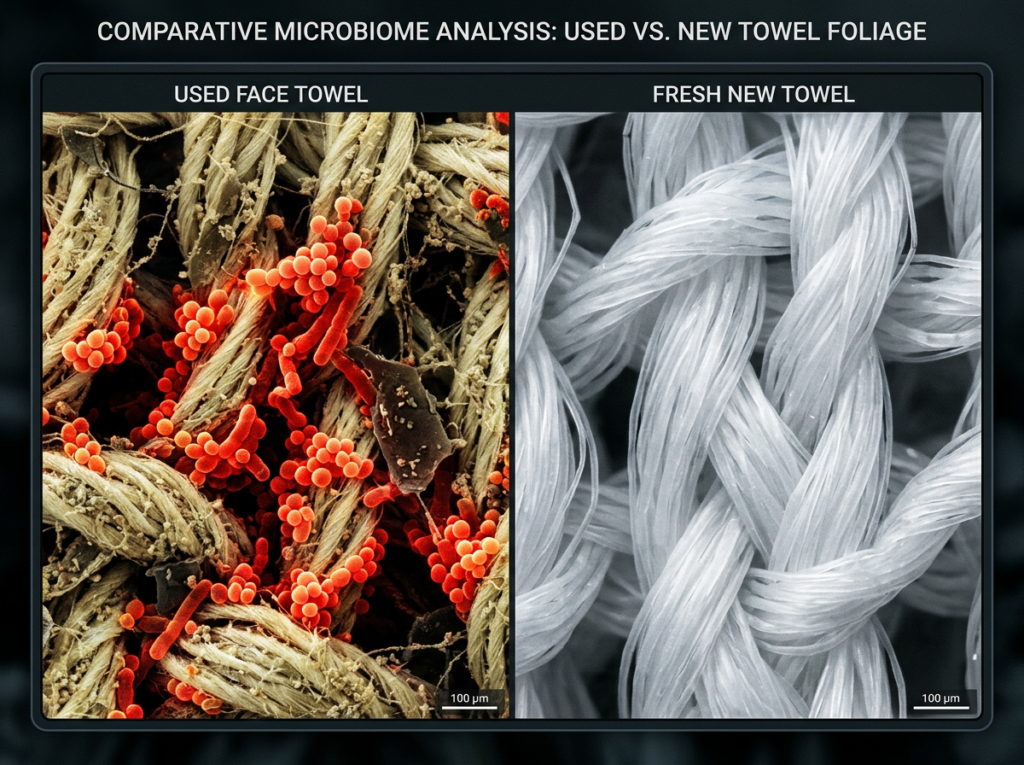
Towels absorb dead skin cells, sweat, and
waste products every single time you use them.
They stay damp for hours — the perfect environment
for bacterial growth.
Face towels are particularly dangerous.
Using a bacteria-laden face towel can cause:
- Acne and breakouts
- Folliculitis (infected hair follicles)
- Contact dermatitis
- Bacterial infection of the eyes and mouth
(when bacteria penetrate mucous membranes)
The replacement schedule you should be following:
| Towel Type | Replace Every |
|---|---|
| Bath towels | 2-3 years |
| Foot towels / bath mats | ~2 years |
| Face towels | Every 1 year |
| Face towels (large households) | Every 6 months |
Most people replace towels when they look worn out.
By that point, the bacterial damage has already
been happening for years.
Wealthy households, the consultant observed,
treat towels like consumables — replaced on schedule,
not when they visibly deteriorate.
Item #2: Reused Disposable Containers
Look in your kitchen right now.
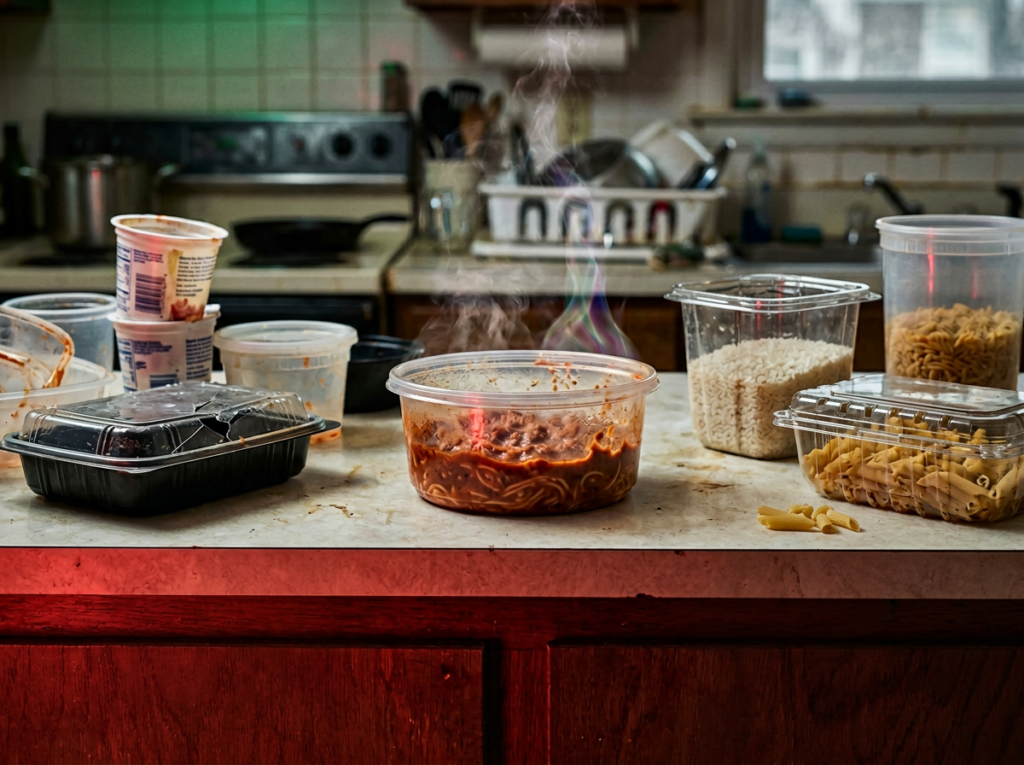
How many disposable plastic containers are
sitting in your cupboard — washed out and
repurposed as food storage?
Takeout containers. Delivery boxes.
Yogurt cups. Single-use trays.
The consultant was direct:
“These are among the most dangerous items
in the kitchen and should be disposed of immediately.”
Here’s why:
Disposable plastics are engineered for one use.
Their structural integrity assumes a single
trip through the supply chain — not repeated
washing, heating, and reuse.
Every time you reuse them, microscopic
scratches accumulate on the surface.
Those scratches are invisible to the eye —
but they’re perfect breeding grounds for bacteria.
The heat problem is even more serious.
When disposable plastic containers are exposed
to hot food, hot liquids, or microwave heat,
they can leach chemical compounds — including
substances classified as endocrine disruptors
(commonly called “environmental hormones”).
These chemicals mimic or interfere with your
body’s hormone system. The research on their
long-term effects is still developing —
but the precautionary principle is clear:
don’t use disposable containers for hot food.
Don’t reuse them at all.
Why Do Wealthy Households Throw These Away?
It’s not because they’re wasteful or careless.
It’s because they’ve internalized a specific mindset:
The cost of replacing a towel or a container is always less than the cost of what keeping it might do to your health.
A pack of face towels costs a few dollars.
A dermatologist visit costs significantly more.
A proper glass or stainless steel food container
costs a few dollars.
The long-term hormonal effects of endocrine
disruptors? Incalculable.
Wealthy people aren’t better at spending money.
They’re better at calculating the true cost
of being cheap.
The Practical Checklist
Go through your home today:
- ✅ Check your face towels — if you can’t
remember buying them, replace them - ✅ Check your bath towels — anything over
3 years should go - ✅ Open your kitchen cupboards — remove
every disposable container you’ve been reusing - ✅ Replace with glass, stainless steel,
or food-grade reusable containers
Two small changes. Immediate health impact.
Did you just realize you have both of these things at home right now? Be honest in the comments — how old are your face towels? 👇